
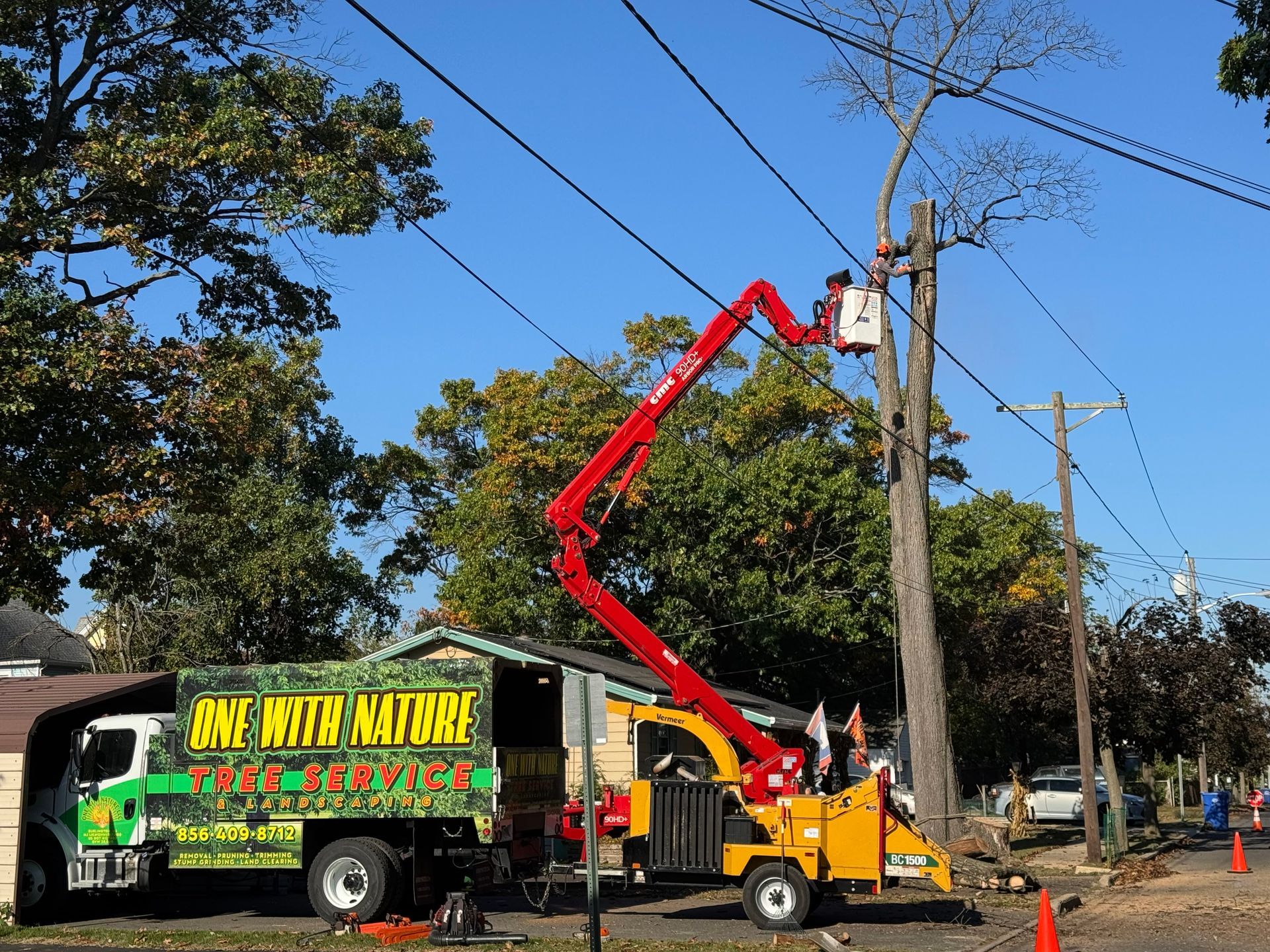
Limbs Cleared Before They Become Problems
Tree Trimming and Pruning in Burlington for removing dead or hazardous branches near homes, driveways, and power lines
Branches scraping against gutters during wind, limbs hanging over driveways that drop debris onto vehicles, or deadwood positioned above walkways create risks that escalate with each storm cycle. One With Nature Tree Service provides tree trimming and pruning throughout Burlington County, removing hazardous limbs while shaping canopies to improve sunlight penetration and long-term structural health. Mature trees in this region often develop competing leaders or crossing branches that rub during movement, creating wounds where decay enters and weakens the tree over subsequent growing seasons.
Pruning focuses on removing dead, diseased, or damaged wood first, then thinning interior growth that blocks airflow and creates dense canopies prone to wind resistance. Crown raising eliminates low-hanging branches that interfere with mowing, foot traffic, or vehicle clearance, while crown reduction shortens overextended limbs without topping the tree and triggering weak regrowth.
Request a trimming consultation to evaluate trees with limbs extending toward rooflines or utility connections.
How Proper Pruning Changes Tree Structure
Trimming work involves three-cut techniques on branches exceeding two inches in diameter, preventing bark from tearing down the trunk when limbs drop. The first cut creates an undercut several inches from the trunk, the second removes the limb's weight farther out, and the third makes the final cut just outside the branch collar where natural healing compounds concentrate. Cuts made flush against the trunk or left as long stubs disrupt the tree's ability to seal wounds, inviting insect infestation and fungal colonization that spread into healthy wood.
After pruning is finished, canopies show balanced structure with evenly spaced branches and open interiors that allow light to reach understory plantings. Yards gain increased sunlight in previously shaded areas, grass grows more uniformly beneath trees, and storm winds pass through the canopy rather than catching on dense foliage clusters that create leverage points. Seasonal pruning benefits include dormant-season work for oaks and elms, which minimizes disease transmission, and late-winter cuts for maples before sap flow begins.
Recurring maintenance scheduling prevents the need for aggressive corrective pruning later, as annual or biennial trimming keeps growth in check without removing large percentages of the canopy in a single session. Storm preparation pruning addresses weak attachments and overextended limbs before hurricane season, reducing failure risk during high-wind events common to South Jersey's coastal-influenced weather patterns.
Questions About Trimming and Maintenance
Pruning decisions depend on tree species, growth patterns, and proximity to structures. These answers clarify timing, techniques, and maintenance intervals for residential properties.
How much of a tree can be pruned at once?
Removing more than twenty-five percent of a tree's canopy in one season stresses the tree and triggers excessive regrowth, so pruning is spread across multiple years for severely overgrown specimens.
What time of year is best for trimming?
Dormant-season pruning between late fall and early spring works best for most species, though storm-damaged limbs should be removed immediately regardless of season to prevent further breakage.
Why do some branches need removal even if they look healthy?
Branches crossing or rubbing against each other create wounds that become entry points for decay, and removing one of the pair prevents long-term structural damage even when both limbs currently appear sound.
How does trimming improve sunlight in the yard?
Thinning interior branches and raising lower limbs increases light penetration to ground level, allowing grass and shade-intolerant plants to thrive in areas previously blocked by dense canopy coverage throughout Burlington neighborhoods with mature tree cover.
What equipment is used for high branches?
Bucket trucks provide access to heights exceeding forty feet for trimming near power lines or rooftops, while climbing with ropes and harnesses handles trees in locations where truck positioning is blocked by fencing or narrow yard access.
One With Nature Tree Service maintains trees across residential properties where regular pruning prevents hazards and supports healthy growth. Arrange a property visit to establish a trimming schedule for mature trees showing dense growth or limbs positioned near structures and utility lines.